

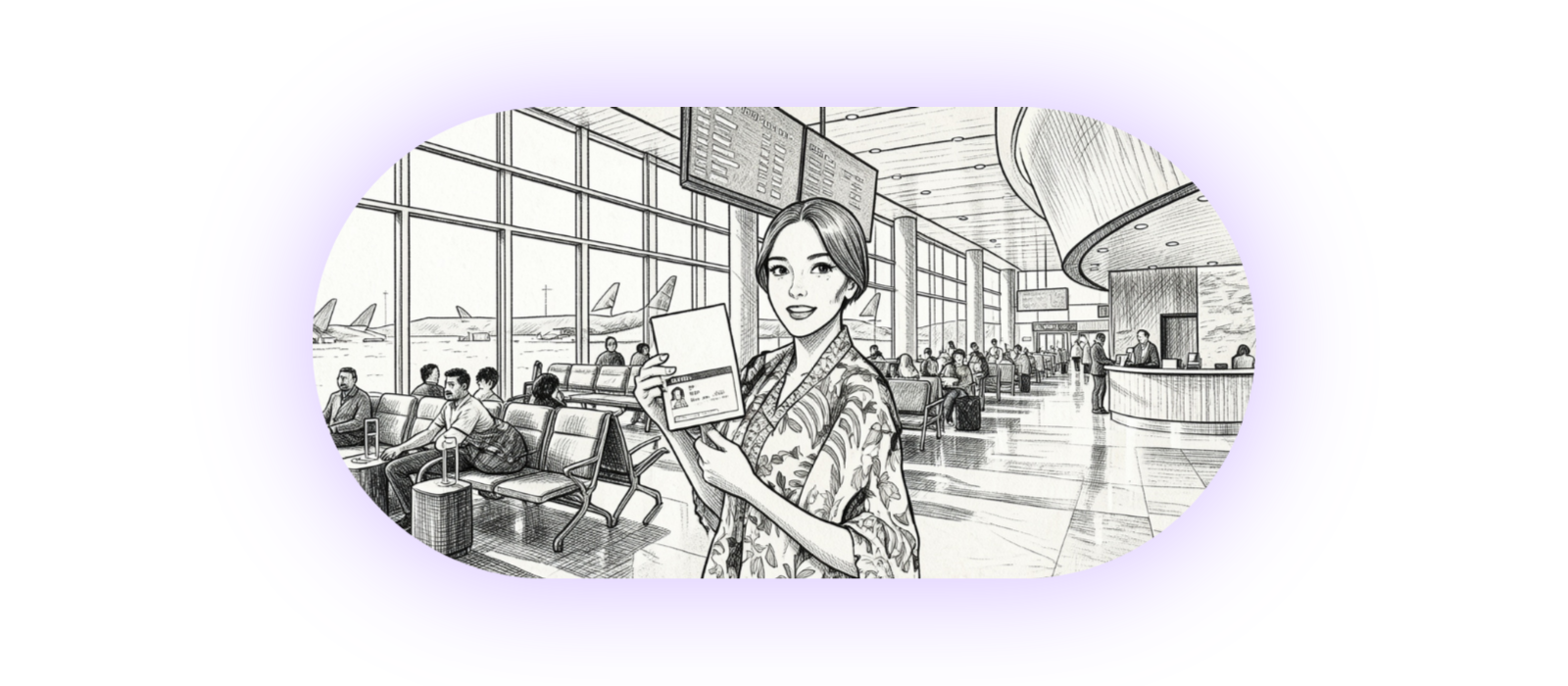
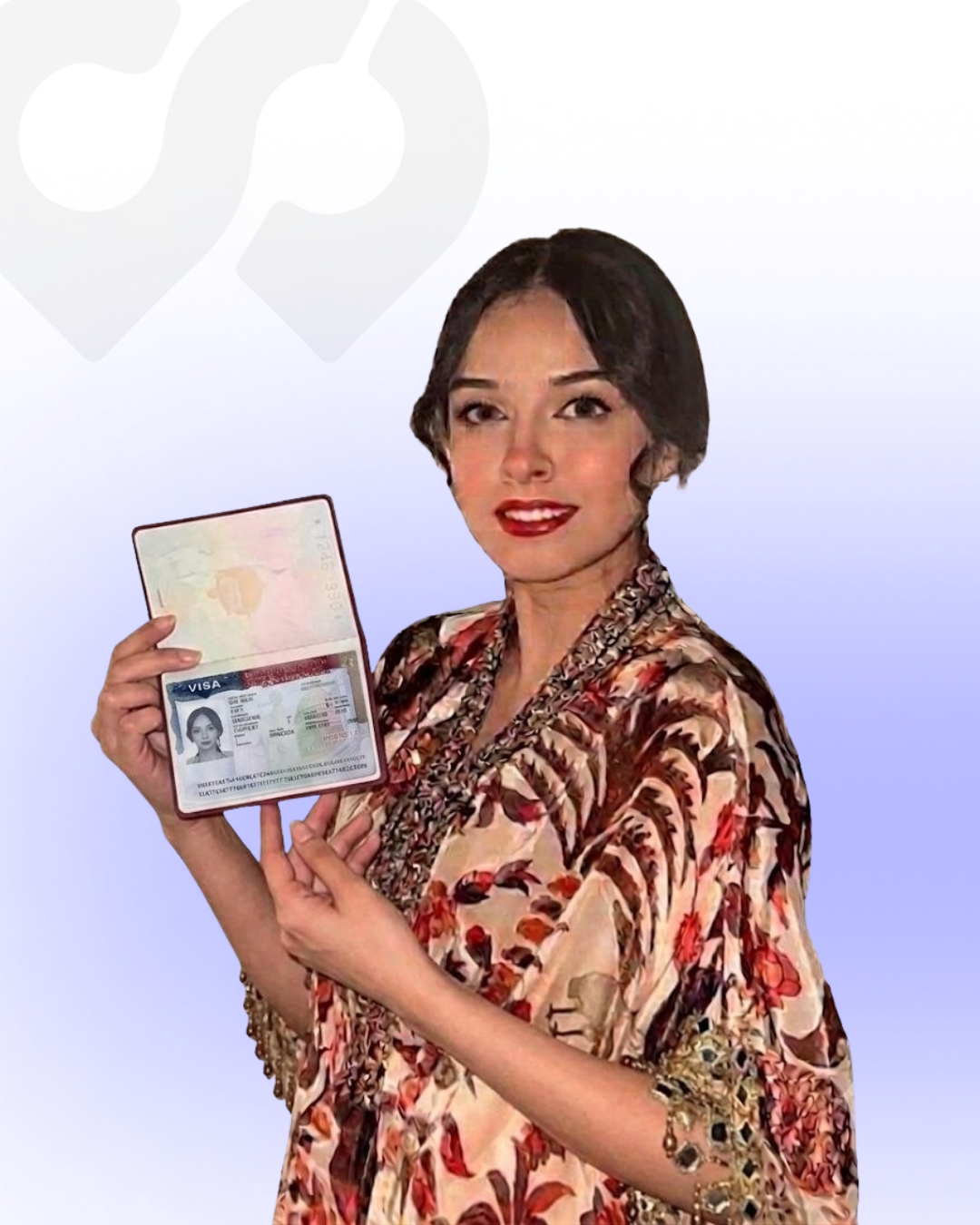
An invitation to perform in New Jersey wasn't enough on its own — Venkatesan needed to prove she had a real professional life to return to. Utter Vision helped her turn her dance academy's own paperwork into the case that got her believed.
The Invitation Alone Was Never Going to Be Enough
Venkatesan Aarti's US visitor visa was issued on May 9, 2024, for a trip where the invitation letter was the easy part.
Proving she deserved the trip was the actual application.
Venkatesan Aarti is 34, from Chennai, Tamil Nadu, where she's trained in Bharatanatyam since she was six years old, under a guru she still visits every festival season out of habit as much as respect.
She performed through her twenties, following the usual circuit of temple programs and cultural sabha stages around the city, before deciding about eight years ago that teaching interested her more consistently than performing did.
She opened a small academy in a rented hall, three evenings a week. She started with eleven students.
Today, that number is slowly approaching forty.
She's married to Karthik, who works at a bank in the city, and the two of them have a household routine built almost entirely around her class schedule and his shift timings, adjusted around each other more than either of them probably notices anymore.
An Invitation Was Only the Beginning
That year, a Tamil cultural association in New Jersey invited Venkatesan Aarti to perform at its annual festival and lead a weekend workshop for diaspora children learning Bharatanatyam far from where the art form actually originated.
The invitation itself was warm and specific.
But Venkatesan Aarti already knew something important.
A fellow dancer who had made a similar trip two years earlier had warned her that an invitation letter on its own doesn't do much of the work a US visitor visa application needs done.
Anyone can be invited to something.
The real question an officer has to answer is whether the person being invited is genuinely who the letter says they are, with a real professional life to return to once the event ends.
That was the part Venkatesan Aarti needed to prove.
She Built the Case Around the Life She Already Had
Venkatesan Aarti found Utter Vision through that same fellow dancer and used its guidance to build a file showing that her academy and her role in it were real, not simply claims written on an application.
She gathered her academy's registration and a current list of enrolled students.
She included a printed class schedule for the term she'd be missing, with substitute teaching arrangements already noted next to the dates she'd be away.
She also included press clippings from two performances over the previous few years.
Nothing dramatic.
Just local newspaper coverage that happened to exist and happened to help.
She added a formal letter connecting the specific New Jersey event to her actual body of work, rather than simply making a general statement about loving to dance and wanting to share her culture.
Every document had a job to do.
Her Return Date Was Already Waiting for Her
The purpose-of-travel letter she wrote, guided by the portal's prompts, named the festival dates, the workshop's specific age group, and the exact date she'd be back in Chennai.
There was a reason that date mattered.
Her academy's next scheduled recital was already booked on the hall's calendar before she'd even applied for the visa.
The details made the trip look exactly like what it actually was:
A short, specific professional engagement with a fixed return date already built into her ordinary working life.
Not a loosely justified vacation with a costume attached.
Venkatesan Aarti rewrote the letter once to remove a sentence about how meaningful the trip would feel personally.
It was true.
But she realized something important:
Being meaningful wasn't the same as being relevant to the purpose of the application.
The application needed to explain what she was doing, why she was going, how long she'd be there, and why she would return.
That was enough.
The Interview Was About Specifics
The interview at the consulate in Chennai covered exactly the ground she'd prepared for.
How long had she run the academy?
How many students did she currently teach?
What exactly would she be doing at the New Jersey event?
When would she return to her students?
Venkatesan Aarti answered in specifics rather than generalities.
By then, the specifics were the only version of the story she'd practiced telling out loud.
She knew the dates.
She knew her student count.
She knew the workshop details.
And she knew exactly what was waiting for her back home.
May 9, 2024
The visa was issued.
Venkatesan Aarti found out at the academy, between classes.
She told her students before she told anyone else, mostly because they were the ones standing in front of her, mid-adavu, when the notification appeared on her phone, propped against the mirror.
For a moment, the application that had occupied so much of her attention was simply over.
Now there was only the trip.
Ten Days in New Jersey
Venkatesan Aarti flew to New Jersey that October, in time for the festival.
She spent the workshop weekend teaching a room full of children who knew the movements from videos and family memory but had never had someone correct their arm positions in person.
For them, the workshop wasn't just a lesson. It was a connection to an art form they had mostly experienced through screens and stories.
Venkatesan Aarti came home ten days later.
Exactly on the date her application had said she would.
Less than 48 hours after landing, she was back at the rented hall in Chennai for her regular Tuesday class, jet lag and all.
Nothing About Her Life Had Changed
Her academy's enrollment grew a little in the months that followed.
Mostly through parents mentioning to one another that their children's teacher had gone to America and taught there.
Venkatesan Aarti finds this slightly funny.
Nothing about her actual teaching had changed.
She was still teaching the same students, in the same rented hall, following the same class schedule.
The New Jersey association has already asked if she'd come back the following year.
This time, she says, at least she knows exactly what the file needs to show.
She doesn't have to relearn everything from scratch.
The Invitation Got Her Considered. The File Got Her Believed.
Venkatesan Aarti says the whole process taught her that being talented at something and being able to prove you're taken seriously at it are two entirely different tasks.
The invitation got her considered.
The rest of the file got her believed.
And the interesting part was that most of the evidence was already sitting around her.
Her student list.
Her class schedule.
Her academy registration.
Old newspaper clippings.
Her upcoming recital.
She hadn't needed to create a new life for the application.
She simply needed to organize and clearly explain the life she already had.
 WhatsApp
 Twitter
 FaceBook
 Linkedin