

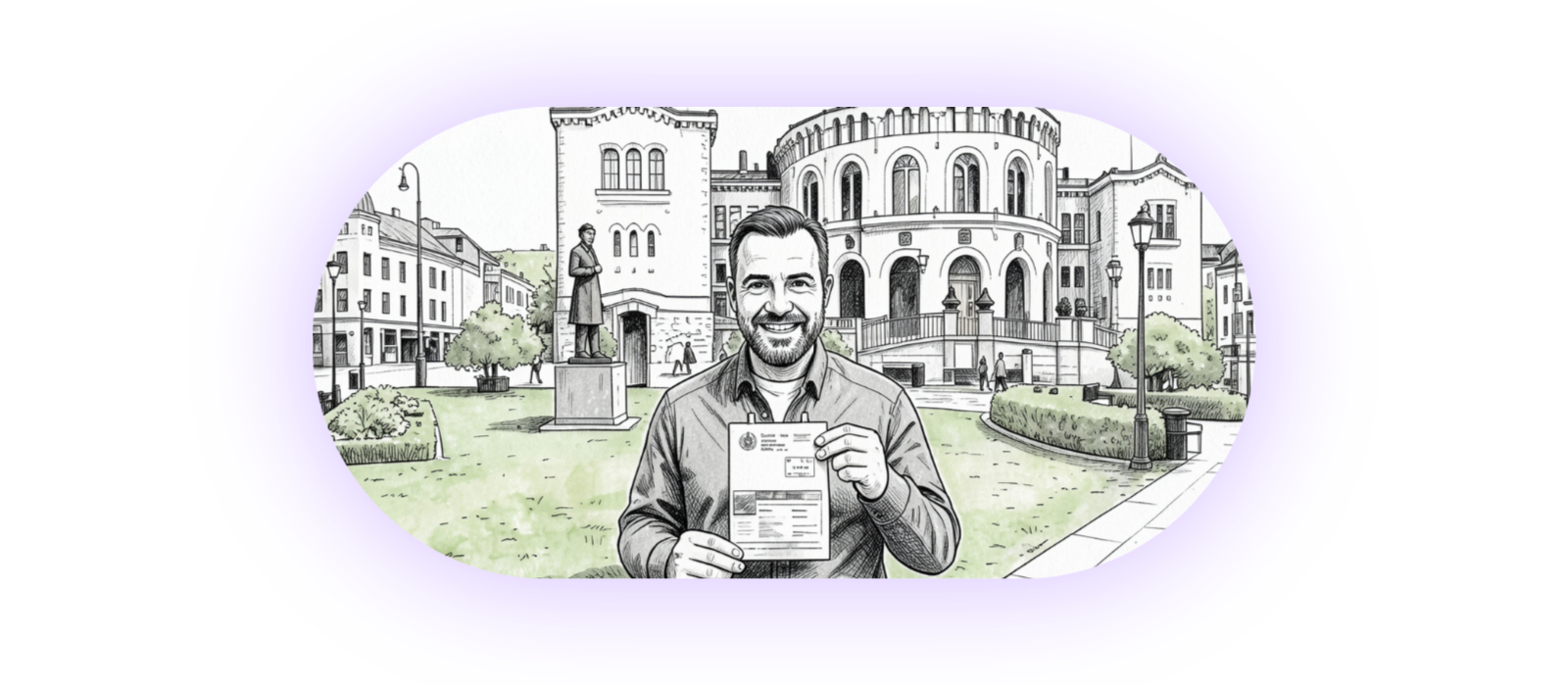
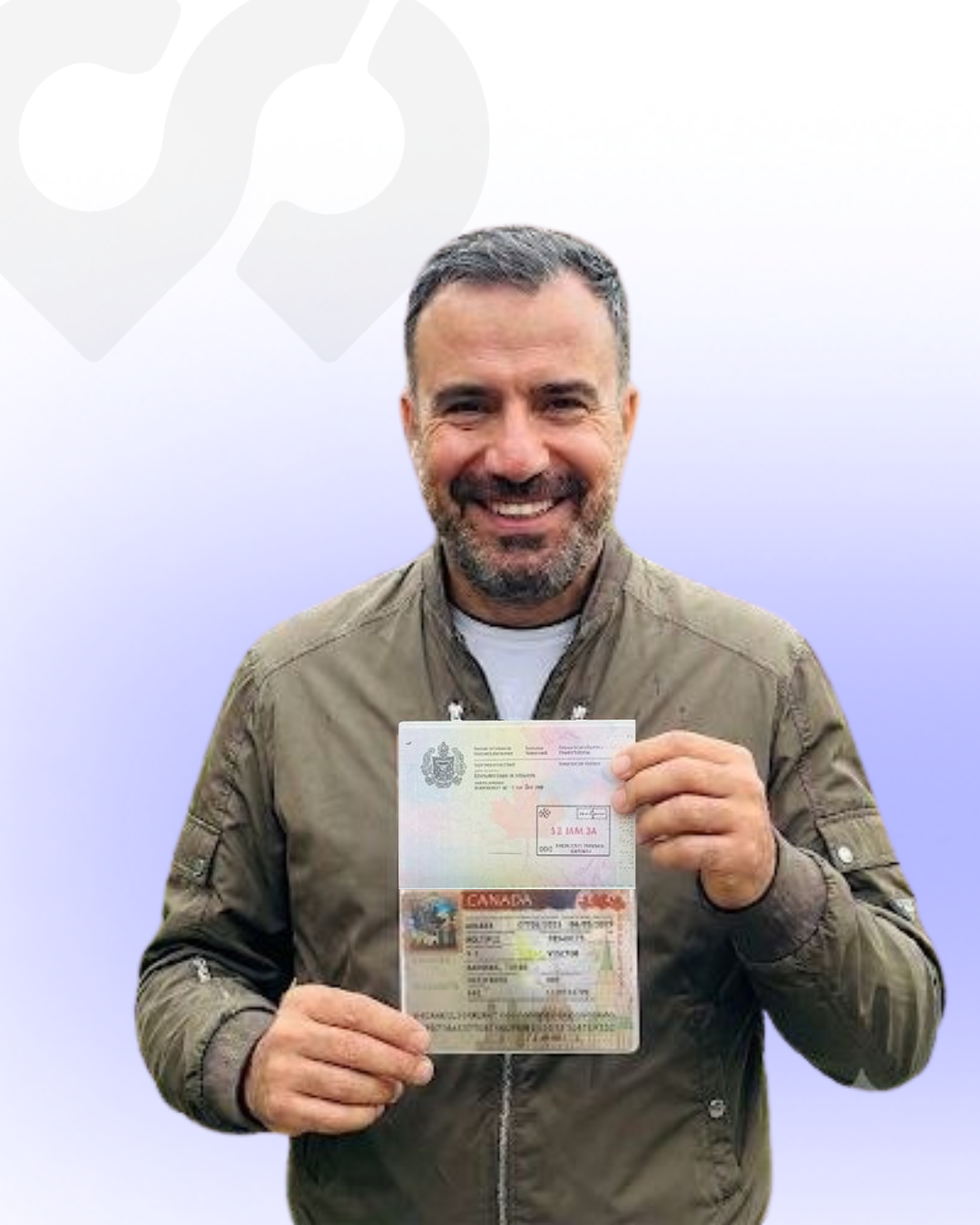
Tufan hadn't seen his son in person in four years and was more afraid of the visa application than any officer's questions. His son used Utter Vision's videos to walk him through it Sunday by Sunday — until Tufan was the one reading the sections out loud.
Four Years Apart, and a Form He Was Too Afraid to Open Alone
Tufan Karahan's Canadian visitor visa was issued May 7, 2024, for a trip his son had to talk him into applying for before he'd even open the form.
Tufan is 50, an accountant at a small company in Ankara, Turkey, where he's worked for over two decades, handling the same clients' books long enough to remember their businesses at half the size they are now. His son, Emre, left for Canada at eighteen to study engineering in Halifax, and four years had gone by since Tufan had seen him anywhere but on a phone screen — a year or so lost early on to pandemic travel restrictions neither of them controlled, and the rest to the ordinary math of a student's tight budget and a small company's limited vacation days never quite lining up for either of them at the same time.
Tufan had never filled out anything online more complicated than a bank transfer, and the idea of a visa application in a language he didn't fully trust himself in was, by his own admission, more frightening to him than any officer's questions would have been. Emre, four years into a country that had made him comfortable with exactly this kind of form, was the one who pushed the trip from an idea they discussed on calls into something with an actual date attached, mostly by refusing to let his father talk himself out of it a third time.
His Son Didn't Just Send Him a Link
It was Emre who found Utter Vision, while looking into what his father would actually need for the application. He didn't just send his father a link and step back.
He set up video calls most Sunday afternoons for about a month, screen-sharing the portal's instructional videos so they could watch them together, pausing to explain a term or translate a phrase Tufan wasn't sure of.
The videos walked through what a visitor visa file needed to show plainly: a clear letter from Tufan's employer confirming his position and approved leave dates, recent bank statements, proof of the home he and his wife, Sevgi, owned in Ankara, and an invitation letter from Emre himself, along with his own study permit and proof of enrollment, showing exactly who his father was visiting and why.
The Real Obstacle Wasn't the Paperwork
None of the documents were especially complicated to gather.
What actually took time was Tufan believing he was allowed to be the one filling anything in.
Rather than handing the whole thing to someone else the way he might have handed off a tax filing he didn't fully understand, Tufan slowly began taking control of the application himself.
Emre's patience over those Sunday calls mattered more than any single document did. By the third or fourth session, Tufan was the one reading sections out loud and asking his son to confirm he'd understood them correctly, instead of the other way around.
“By the third or fourth session, Tufan was the one reading sections out loud.”
Emre still brings it up as one of the stranger role reversals of his time abroad.
The application went in that spring, submitted online with no interview required, the way most Canadian visitor visa cases are decided. Tufan still went to a visa application centre in Ankara once, for biometrics, a short appointment that he'd built up in his head over several sleepless nights as far more intimidating than it actually turned out to be.
May 7, 2024
The visa was issued.
There were no further questions and no delay worth mentioning.
Tufan read the notification twice at his desk at work before telling anyone, including Sevgi, who found out only because he finally called her from the break room, unable to keep it to himself any longer than about twenty minutes.
Four Years Later, They Finally Had Two Weeks Together
He flew to Halifax that July, during a stretch when Emre's coursework let up enough to actually spend real time together instead of squeezing visits around exams the way a shorter trip might have required.
Tufan has said since that the two weeks passed faster than any two weeks of his life.
Meeting his son's roommates and seeing the small apartment he'd only ever seen in the corner of a video call made the previous four years feel, briefly and strangely, like they'd happened to someone else entirely.
Four years of phone screens became two weeks together.
He's back at his desk in Ankara now, still handling the same clients' accounts. Sevgi has already started asking when they might go together next time, ideally timed around Emre's eventual graduation in a couple of years.
Emre, for his part, has taken to sending his father short video clips of Halifax's harbor most weeks, unprompted, the way people do once they've realized someone on the other end is actually picturing the place now instead of just imagining it from a description.
The Form Was Never Really the Obstacle
Tufan says the form was never really the obstacle, once he understood it.
The obstacle was believing a fifty-year-old could still learn to do something completely new.
With his own son as the one teaching him, Tufan discovered that asking for help didn't mean giving up control.
And perhaps that's what makes his story worth remembering: sometimes the hardest part of an immigration application isn't the paperwork. It's believing you can do it yourself.
 WhatsApp
 Twitter
 FaceBook
 Linkedin